Portfolio

Summary of my previous and ongoing (research) projects, primarily focused on quantum physics, statistical modeling, and applied machine learning. All illustrations were created by me unless otherwise noted. Publications are open access.

Singapore Income Distribution Analysis

Singapore Income Distribution Analysis (2025)

This analysis has been conducted using publicly available data from the Inland Revenue Authority of Singapore (IRAS) on the assessable income of tax residents.
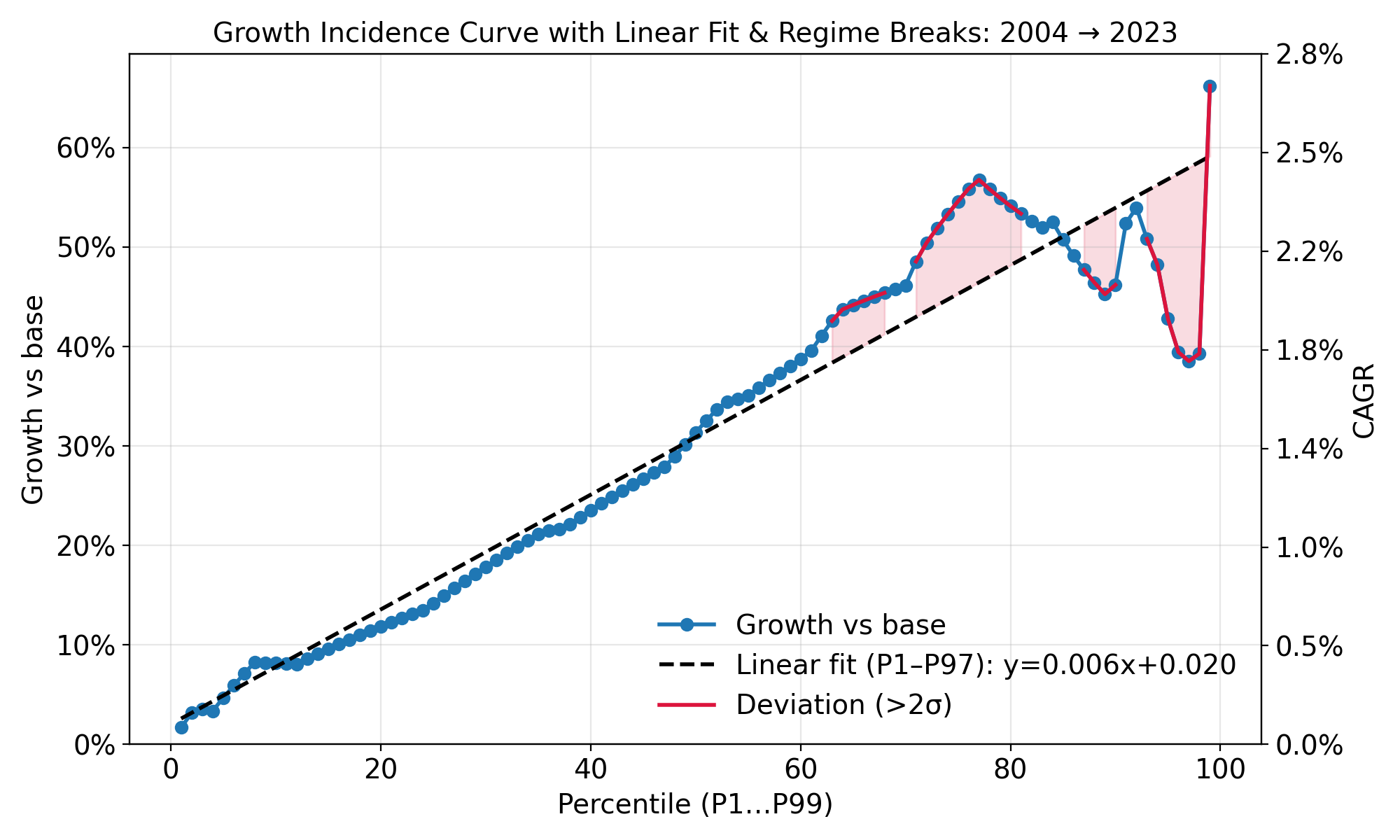
Between 2004 and 2023, Singapore's income distribution experienced broad-based growth, as shown in the Growth Incidence Curve. For most percentiles, incomes rise almost linearly — roughly +0.6% cumulative growth per percentile — reflecting consistent gains across the population. Yet, several regime breaks emerge: percentiles P62-P67 and P70-P80 temporarily outpace the linear trend, while P86-P89 and especially P92-P98 fall below it.
Finally, the top 1% (P99) stand out again, with a cumulative growth of around 66%, exceeding the fitted line. These breakpoints highlight how inequality pressures are concentrated at the very top, despite broadly shared gains across most of the distribution. GitHub Repo: Link, Data Source: Link

Explaining Electriciy Prices in France and Germany

Quant Research Challenge: Explaining Electricity Prices in DE & FR (2024)

By the time of submission, my solution ranked in the top 9% of all global participants.
This project was part of a quantitative research challenge by the Quant Hedge Fund QRT where the goal was to explain daily price variations for 24-hour electricity futures in France (FR) and Germany (DE). Link to the challenge

My approach focused on country-specific models: using a LightGBM regressor for Germany and a regularized Elastic Net for France. To improve predictive power, I engineered features such as cross-border flow differentials, renewable production bundles, and weather-demand interactions. Hyperparameter optimization was applied to maximize Spearman rank correlation, ensuring the models captured directional movements in futures prices.
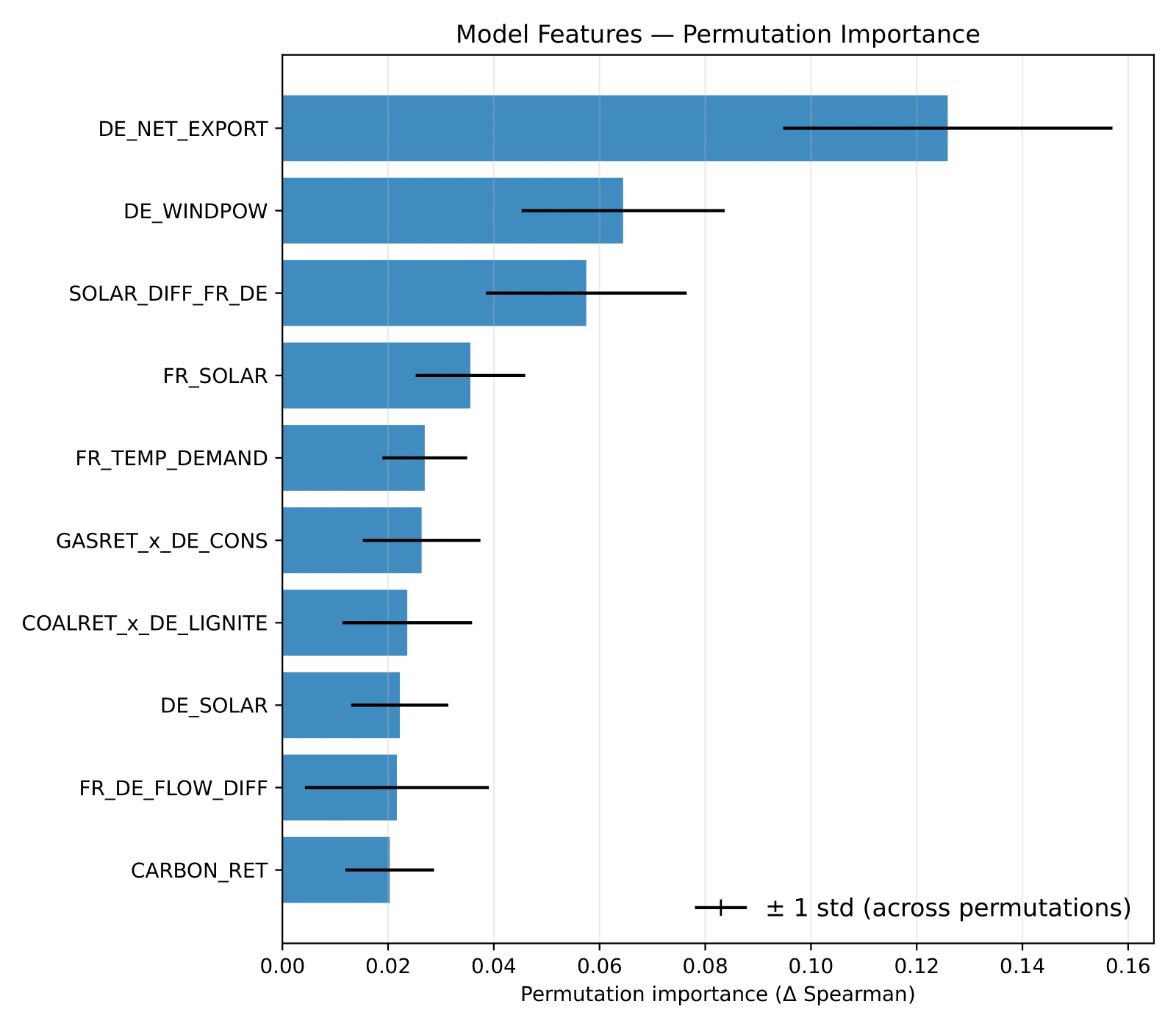
The figure on the left shows the permutation importance analysis for the German model over 200 iterations. It highlights that net exports, wind generation, and solar spreads between France and Germany were the most influential drivers of daily price variation. France required heavier regularization due to noisier patterns, reflecting structural differences between the two markets.
GitHub Repo: Link

Project 1 Image

Multivariate Bicycle Codes (2024)

Quantum error correction suppresses noise in quantum systems to allow for high-precision computations. Quantum error correction suppresses noise in quantum systems to allow for high-precision computations. In this work, we introduce Multivariate Bicycle (MB) Quantum Low-Density Parity-Check (QLDPC) codes, via an extension of the framework developed by Bravyi et al. [Nature, 627, 778-782 (2024)] and particularly focus on Trivariate Bicycle (TB) codes. Unlike the weight-6 codes proposed in their study, we offer concrete examples of weight-4 and weight-5 TB-QLDPC codes which promise to be more amenable to near-term experimental setups. We show that our TB-QLDPC codes up to weight-6 have a bi-planar structure. Further, most of our new codes can also be arranged in a two-dimensional toric layout, and have substantially better encoding rates than comparable surface codes while offering similar error suppression capabilities. For example, we can encode 4 logical qubits with distance 5 into 30 physical qubits with weight-5 check measurements, while a surface code with these parameters requires 100 physical qubits. The high encoding rate and compact layout make our codes highly suitable candidates for near-term hardware implementations, paving the way for a realizable quantum error correction protocol.
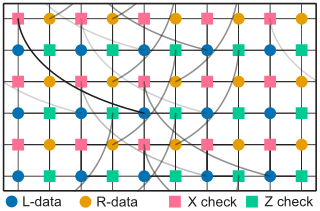
The picture on the left is Fig. 1 in our paper showing the Tanner graph for our weight-5 [[30, 4, 5]] code.

In collaboration with Sim Jian Xian, Tobias Haug, Kishor Bharti (National University of Singapore, TII Abu Dhabi, A*STAR Agency for Science & Technology Singapore)
Publication: Link

Project 2 Image

Context-aware gate calibration with Deep Reinforcement Learning (2024)

The advent of scalable quantum computation relies on the possibility of executing quantum gates with high fidelity. To do so, there is a need to design operations which are robust to a variety of noise sources. While many techniques exploiting both physical models and experimental data have emerged in the past few years, few of them actually consider the noise inherent to the execution of a specific quantum circuit context. In this work, we benchmark the importance of such noise on near-term superconducting quantum devices and propose a new dynamical gate calibration method based on model-free reinforcement learning for its active suppression. In particular, we employ Proximal Policy Optimization (PPO), a policy-gradient method that improves stability during training. We demonstrate the efficiency of the method by addressing a pulse optimization over a set of parameters that would be adjustable in real-time, provided that the control system is equipped with such real-time processing features. This means that no additional memory overhead should be required in the control system to enable an adaptive and context-aware gate calibration. We envision our method to become a new tool in the calibration workflows enabling the successful execution of complex quantum algorithms. We also open the door to a change of paradigm regarding the traditional gate model of quantum computation, enabling the seamless adjustment of those building blocks based on the context they are executed in.
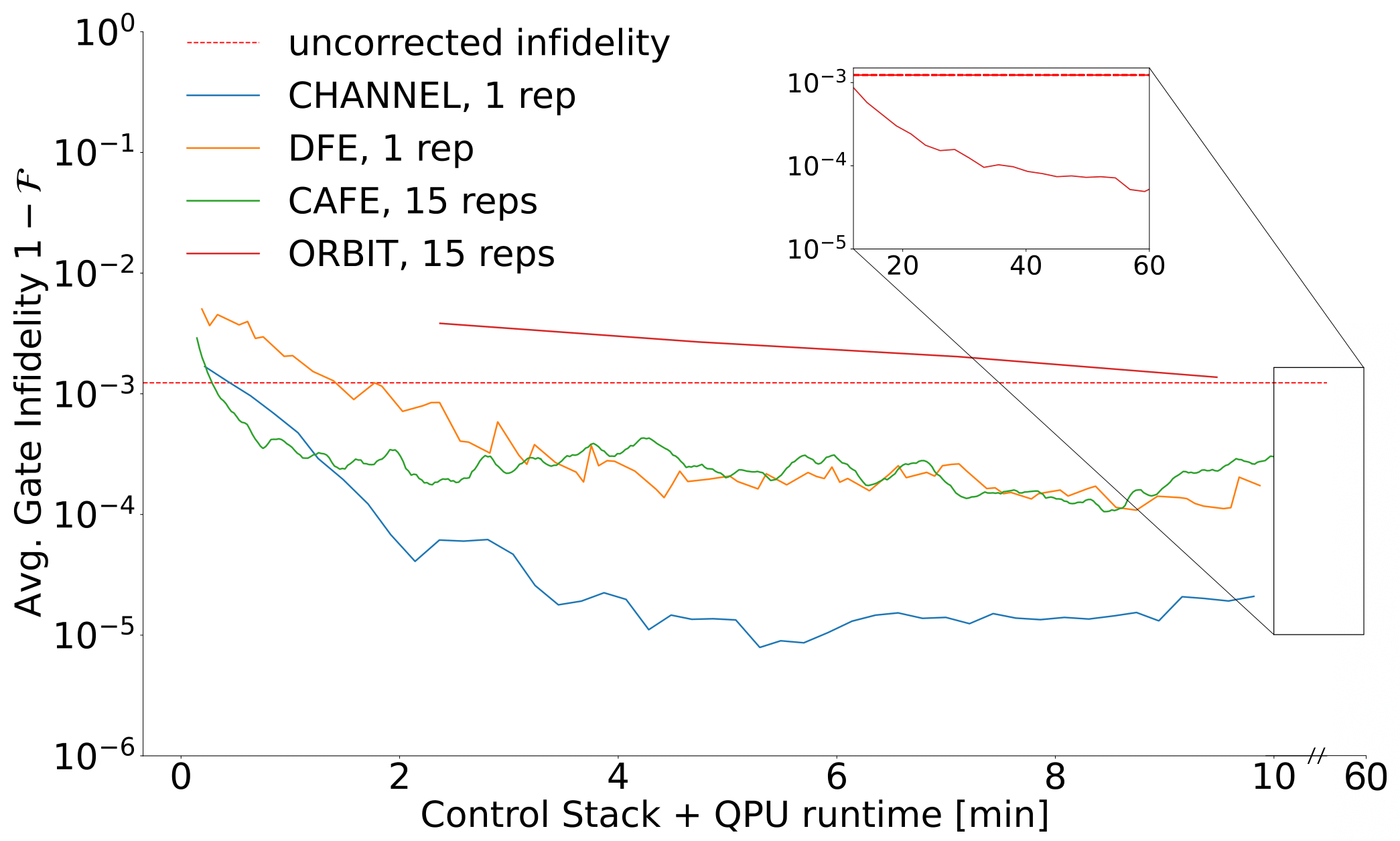
The provided pictures shows the average gate error (infidelity) over the training time of the Reinforcement Learning model if performed on a real quantum computer.

In collaboration with Arthur Strauss & Hui Khoon Ng (Centre for Quantum Technologies, National University of Singapore)
Manuscript in the making. GitHub Repo: Link

Project 4 Image

Parallelized Deep Learning Training - A Performance Study with GPU (2023)

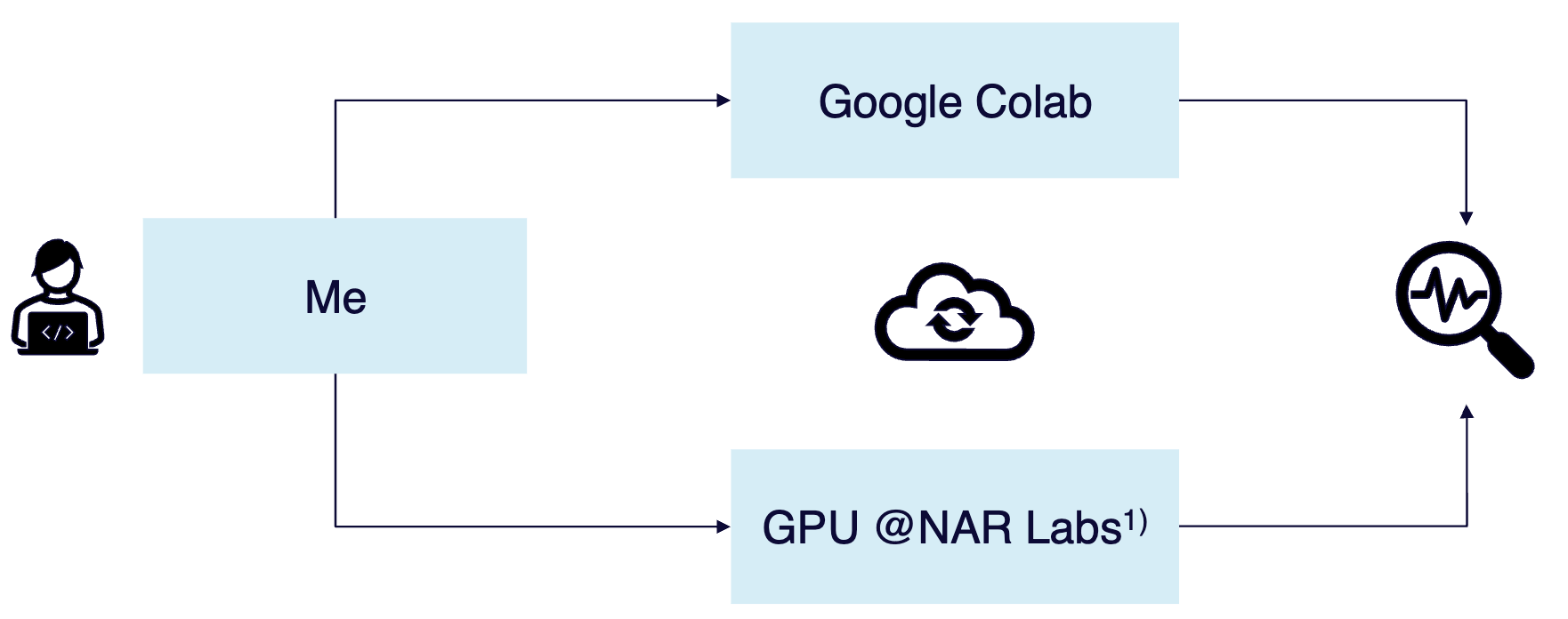
In this project, I investigated the performance of parallelized deep learning training on an NVIDIA RTX 3070 GPU. I compared the training time of a convolutional neural network (CNN) on both a CPU and a GPU. The CNN was trained on the MNIST dataset, a popular benchmark for image classification. I implemented the CNN using the PyTorch library and trained it on the GPU utilizing CUDA. My findings showed that training the CNN on the GPU significantly reduced the training time compared to training on the CPU. I also explored the impact of batch size, learning rate, the choice of optimizer, and data parallelization on the training time and accuracy of the CNN. Parallelizing data loading across worker processes leads to a significant performance gain by reducing training time. Overall, this study demonstrates the benefits of parallelized deep learning training on a GPU for accelerating CNN training.
Illustration on the left is taken from my slide deck. 1) National Applied Research Laboratories provided GPU access for this project.

Final project of class "High-Performance Big Data and Artificial Intelligence Systems" (National Taiwan University, ROC)
Slide Deck: Link

Project 3 Image

Automation of Anki Flashcard Creation (2023)

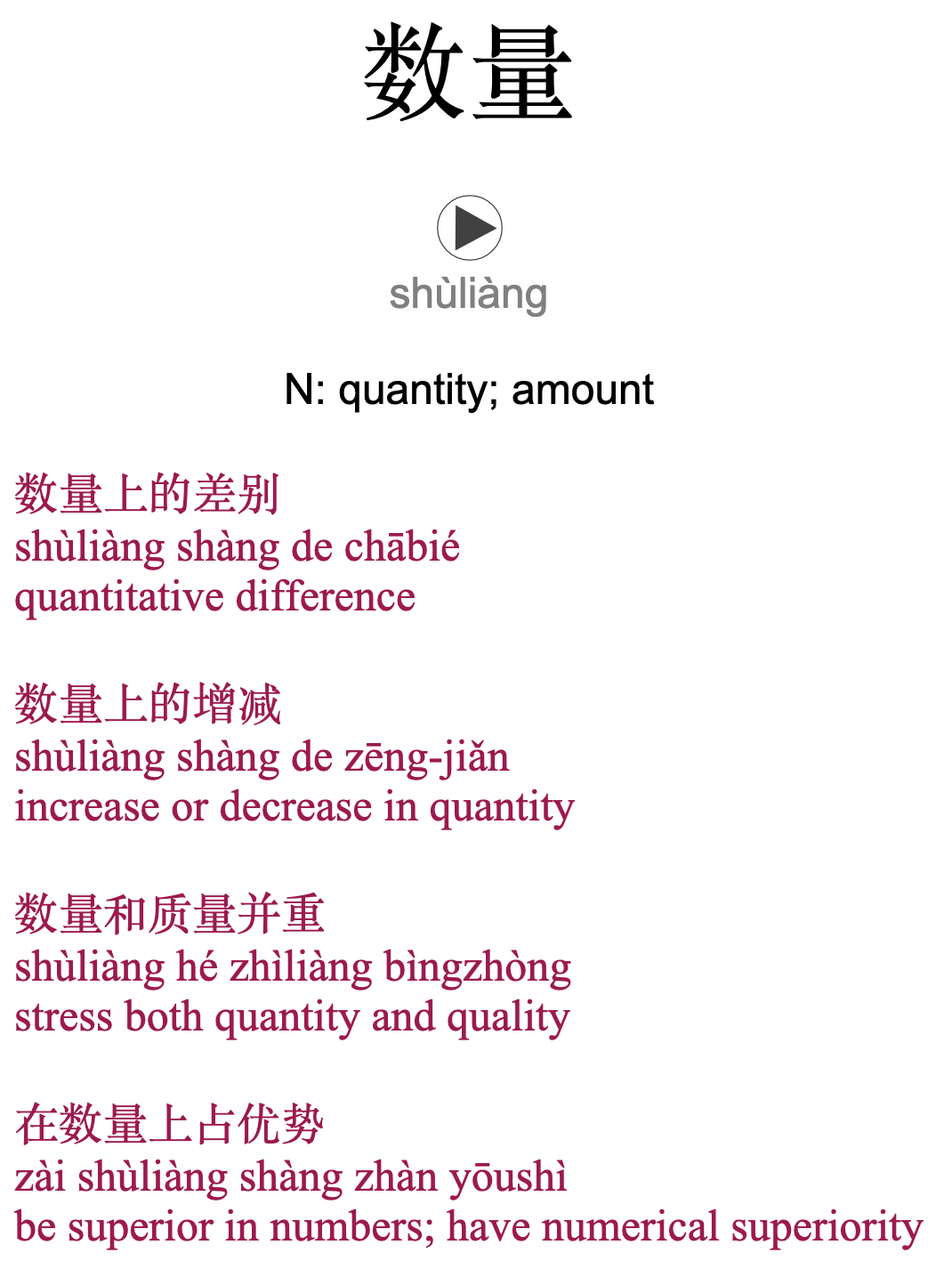
This automation tool is designed to optimize the way Chinese learners create their flashcards in Anki. Anki is a digital flashcard application based on the "spaced-repetition" method for human memory. This Python tool utilizes Anki's ability to import CSV files and directly creates corresponding flashcards.


The tool automates the process, making it easier for learners to generate flashcards efficiently.

  • Input: An Excel file (hanzi_list.xlsx) that contains a column with the header "Hanzi," where the Chinese characters (simplified or traditional) are listed for flashcard creation.
  • Output: An Excel file (chinese_vocabulary.xlsx) that includes the characters, their phonetics (pinyin), English translations, and, in some cases, an example sentence.
    According to each Chinese character (Hanzi), the corresponding pinyin and English translation are added to the dataframe generated from the input Excel file. This file is then exported to a CSV, which can be directly imported into Anki.

There is another script that semi-automates the process of adding mp3 audio files to your Anki flashcards directly within the Anki app. It's similiar to a Windows AutoHotkey script:

  • First, download the Forvo Add-On. This extension allows you to add mp3 audio files based on a field in your Anki flashcard. It uses recordings from the Forvo community.
  • Adjust the coordinates of the buttons according to your screen, and you can start the script.
  • The script will then perform the necessary clicks to add the recording for each card.

Picture on the left shows an example Anki card created by this tool.


Own mini life-automation project during my time in Taipei, ROC.
GitHub Repo: Link

Project 4 Image

Network Theory - An executive summary (2022)

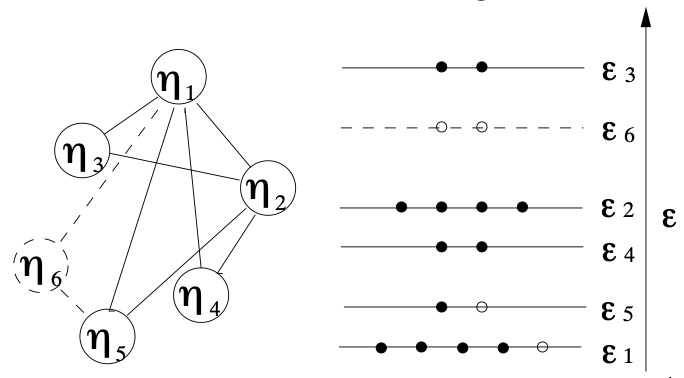
Provides a comprehensive overview of Network Theory, and introduces important concepts and phenomena such as Power-Law observations in distribution functions of a network, the Bianconi-Barabási model, "winner-takes-all" and the spread of information in random networks.
The picture on the left provides a mapping between fitness of a network to Bose-Einstein condensates. (taken from Bianconi and Barabási, 2001)

Graduate Seminar in Advanced Interdisciplinary Statistical Methods (Ulm University, Germany)
Slide Deck: Link

Project 5 Image

Monte Carlo Simulations of NV centres as open quantum system (2021)

Nitrogen Vacancy (NV) centres are a promising candidate for quantum information processing. In this work, we investigate the dynamics of an NV centre as open quantum systems using Monte Carlo simulations for a non-Markovian description. We describe the NV centres as a two-level system interacting with a bath 13C nuclear spins in the carbon lattice. Spins are modeled by stochastic differential equations (Markovian quantum jump approach) leaning on ideas from a work by Breuer (2004). We show that using a Markovian approach under a stochastic formalution of the von-Neumann equation, we can recover exact dynamics of a non-Markovian physical system as the NV centre in the presence of a bath. Numerical simulation in Matlab.
The picture on the left shows an illustration of two interacting spins.

Honors Research Project @Institute for Complex Quantum Systems (Ulm University, Germany)
Slide Deck: Link